There is one thing British Muslims notice within an hour of landing in Saudi Arabia, and it usually takes them by surprise. You can eat anywhere. No checking labels, no asking awkward questions at the counter, no scrolling through reviews to find the one place in town. Every restaurant, every supermarket, every hotel buffet is halal. For anyone used to the usual routine at home, it takes a day or two to stop double-checking.
Food matters more on this trip than people expect. You will be on your feet for hours, often in heat, and eating badly is the quickest way to spend your last few days feeling rough in a hotel room. Most all-inclusive Umrah packages include some sort of meal arrangement, usually breakfast and dinner at the hotel, so it is worth knowing what that covers before you go and what you will want to seek out for yourself.
What hotel meal plans actually give you
Most hotels near the Haram run buffets, and the standard is generally decent rather than exciting. Breakfast tends to be a mix of Arabic and continental: flatbreads, foul (stewed beans), eggs, olives, cheese, plus the usual cereals and pastries for anyone who wants something familiar. Dinner is normally rice, grilled or roasted meat, a few stews, salads and fruit.
The thing to check before booking is whether your package includes meals at all, and if so which ones. Half board is common, and it suits most pilgrims well, since you are often out of the hotel through the middle of the day anyway. If you have particular dietary needs, tell the operator at the point of booking rather than assuming the hotel will sort it on arrival.
The dishes worth trying
Saudi cooking is built around rice and slow-cooked meat, and it is very good when you find it done properly rather than in a hotel tray.
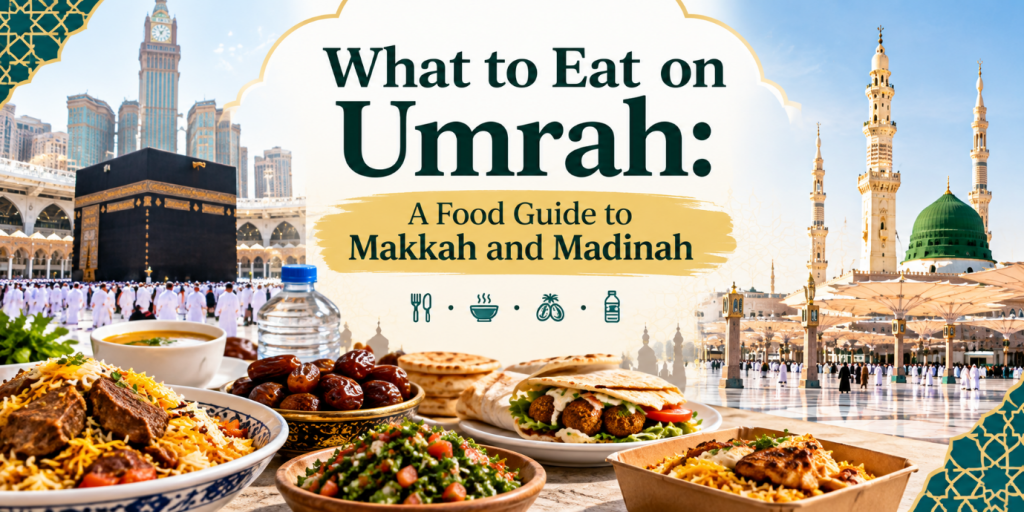
Kabsa is the national dish and the one to start with: spiced rice with chicken or lamb, usually served on a large shared platter. Mandi is similar but the meat is cooked in a pit oven, which gives it a smokier flavour and meat that falls off the bone. Mutabbaq is a stuffed, folded pancake sold from small shops in the evenings, filled with minced meat, eggs and leek, and it makes a good cheap supper. Shawarma is everywhere and, at a couple of riyals a wrap, is what most pilgrims end up living on between prayers.
For something sweet, look for kunafa, luqaimat (small fried dough balls in date syrup) and Arabic coffee served with dates. The coffee is lightly spiced with cardamom and is nothing like what most people expect from the word coffee.
Dates, Zamzam and what to bring home
Madinah is famous for its dates, and the Ajwa variety grown around the city is the one people seek out. The markets near the Prophet’s Mosque are full of them, sold loose and in gift boxes, and buying a box to bring back for family and neighbours has become something of a tradition among British pilgrims. Taste before you buy where you can, as quality varies a great deal between stalls.
Zamzam water, from the well in Makkah, is drunk by pilgrims throughout the trip. Rules about carrying it home in your luggage change from time to time and vary by airline, so check with your operator or airline before you travel rather than finding out at the airport.
Timing your trip around comfort
When you travel changes the whole experience of eating there. In the summer, the heat kills your appetite through the day and you end up eating late at night. The cooler months are far more pleasant, and you can actually walk out to a restaurant in the evening without it being an ordeal. This is one of the quieter reasons December Umrah Packages from UK are so popular with families. The weather is mild, the crowds are thinner than in Ramadan, and the food courts and restaurants around both mosques are busy without being impossible. Operators such as Islamic Travel Agency see strong demand for that window, and the better-located hotels go early, so it pays to book well ahead.
Eating well without spending a fortune
Food immediately around the Grand Mosque is priced for convenience, and the international chains in the shopping centres are dearer than they are at home. Walk five or ten minutes away from the mosque and prices drop noticeably for food that is usually better.
The large supermarkets near both mosques are worth a visit early in your trip. Stock up on water, fruit, dates and nuts to keep in the room, which saves both money and the effort of going out when you are tired. Many pilgrims find they eat one proper meal a day and graze the rest of the time, which suits the rhythm of prayers better than three sit-down meals.
Staying well
A few sensible habits go a long way. Drink far more water than you think you need, especially if you are walking between the hotel and the mosque several times a day. Stick to bottled or Zamzam water. Be a little cautious with street food in your first day or two while your stomach adjusts. If you are travelling with elderly relatives or anyone managing a health condition, speak to your GP before you go about meals, medication timing and anything that needs care away from home.
Part of the journey
Nobody goes on Umrah for the food. But sharing a platter of kabsa with people you have just met, or handing round a box of Ajwa dates at home afterwards, ends up being part of what you remember. Eat sensibly, drink plenty, try a few things you would not get at home, and leave room in the case for the dates.