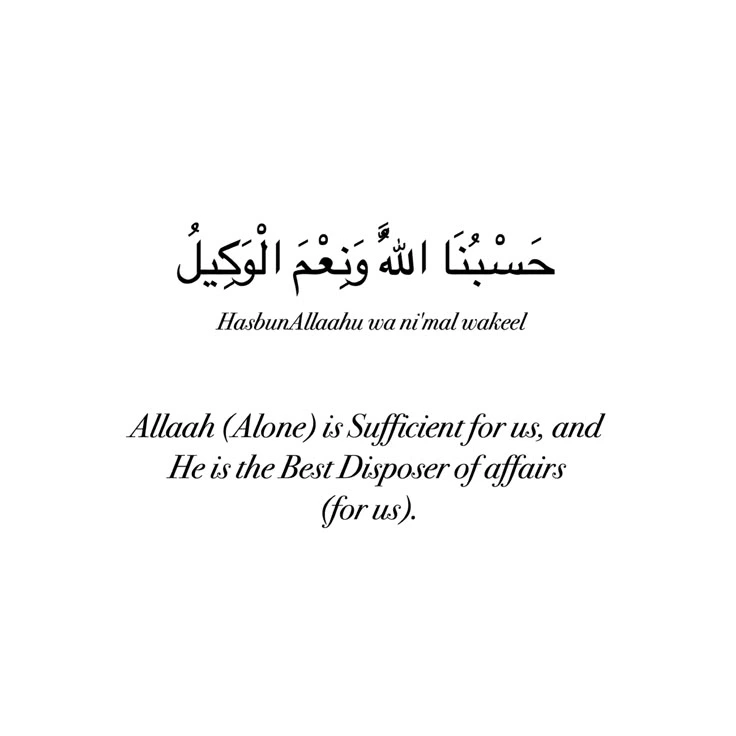
Hasbunallah Wa Ni’mal Wakeel is a powerful Quranic phrase that reminds believers that Allah is enough for them. It means that when you face fear, difficulty, or any challenge in life, Allah is the best One to trust and the best Protector. This beautiful phrase has been a source of comfort for Muslims throughout history, giving them strength when things feel impossible.
The message behind this dua is simple: When Allah is with you, nothing can harm you. It teaches us to rely on Allah completely and to believe that He always knows what is best for us.
What Does “Hasbunallah Wa Ni’mal Wakeel” Mean?
This phrase is made up of two essential parts:
- Hasbunallah – Allah is enough for us.
- Wa Ni’mal Wakeel – And He is the best Disposer of affairs.
Together, the sentence means that Allah alone is enough for comfort, help, and protection, and if we trust Him fully, He will take care of every matter in the best way.
This phrase shows that a person has complete faith in Allah and is not shaken by life’s ups and downs. Muslims use it during times of stress, fear, or hardship, or when they need strength.
Many people also search for hasbunallah wani’mal wakeel meaning in Urdu, which is often translated as: “Allah hamaare liye kaafi hai aur wohi sab se behtareen Kaaryasaaz hai.”
Hasbunallah Wa Ni’mal Wakeel in the Quran
This phrase appears in Surah Al-Imran (3:173). When Muslims faced enemies who were stronger and more prepared, others tried to frighten them by saying, “People have gathered against you.” But the believers responded with strong faith:
“Hasbunallah Wa Ni’mal Wakeel.”
Allah is enough for us, and He is the best Protector.
This shows that true believers trust Allah even when situations look difficult or dangerous. Instead of fear, this reminder strengthened their hearts.
The lesson from this ayah is clear: No matter how big your problem is, Allah is bigger.
Why Is This Phrase So Powerful?
1. It Builds Spiritual Strength
When you say Hasbunallah Wa Ni’mal Wakeel, your heart becomes stronger. You remember that Allah is watching, listening, and helping.
2. It Removes Fear
Fear is natural, but this phrase reminds you that Allah is the Protector. Nothing can harm you without His permission.
3. It Helps During Difficulty
Whether you are going through emotional pain, financial issues, or health struggles, this phrase gives hope. It reminds you that relief will come.
4. It Increases Tawakkul (Trust in Allah)
The phrase teaches you to rely on Allah even when you do not understand why something is happening. Tawakkul means doing your best but trusting Allah for the results.
5. It Gives Peace of Heart
When you leave your matters to Allah, your heart becomes calm. You stop worrying about things you cannot control.
When Should You Read “Hasbunallah Wa Ni’mal Wakeel”?
You can read it anytime, but it is especially powerful during:
- Stress and anxiety
- fear or danger
- financial loss or hardship
- health problems
- important decisions
- sadness or disappointment
- Situations where you feel helpless
- Any moment when you need Allah’s help
Reading this phrase regularly brings deep peace and strengthens your connection with Allah.
Many people also read hasbunallahu wa ni’mal wakeel wazifa for protection, relief, and inner strength. Still, it should always be done with complete sincerity and belief, not as a magic formula.
Benefits of Saying “Hasbunallah Wa Ni’mal Wakeel”
The benefits of reciting this phrase are many. Here are some of the most important ones:
1. Protection from Harm
Allah protects the believer who truly trusts Him. This phrase acts like a shield for the heart.
2. Help During Difficult Times
When you have no one else, Allah is still there. This dua brings divine help, sometimes in ways we cannot imagine.
3. Relief from Worries
Anxiety and stress often come from uncertainty. This phrase reminds you that Allah controls everything.
4. Inner Peace
Your heart becomes peaceful because you know Allah is taking care of your affairs.
5. Strength Against Enemies or Challenges
Just as the early Muslims found courage, you too can feel brave by remembering that Allah is enough.
6. Brings Barakah (Blessings)
Trusting Allah brings blessings in life, whether in health, wealth, relationships, or peace.
Many believers read it to get spiritual strength, and they consider it among the powerful hasbunallahu wa ni’mal wakeel benefits that can transform a person’s life.
How to Practically Use This Dua in Daily Life
Here are some simple ways to include this phrase in your routine:
- Say it after every prayer
- It increases trust in Allah.
- Say it when you feel stressed.
- It calms your heart.
- Say it before making big decisions.
- It reminds you to rely entirely on Allah.
- Say it when something worries you.
- It gives courage.
- Say it when you feel alone.
- It reminds you that Allah is with you.
You can also reflect on powerful verses like Ayat Ul Kursi, which also highlight Allah’s greatness and protection.
Hasbunallah Wa Ni’mal Wakeel Dua
This phrase is also used as a hasbunallah wani’mal wakeel dua for strength, protection, and relief. Read it with trust, and ask Allah to handle your matters in the best way.
FAQs
1. What is the meaning of “Hasbunallah Wa Ni’mal Wakeel”?
It means: “Allah is enough for us, and He is the best Disposer of affairs.”
2. Where is this phrase found in the Quran?
It is mentioned in Surah Al-Imran (3:173).
3. When should I recite it?
You can read it anytime, especially during fear, stress, hardship, or critical decisions.
4. What are the benefits of reciting this phrase?
It brings peace, courage, protection, and trust in Allah.
5. Can I read it as a dua?
Yes, it is also used as a powerful dua to seek Allah’s protection and help.
6. Is it okay to recite it daily?
Yes, reciting it daily increases faith and brings blessings.